If your UPVC window won’t open or your window is not closing properly, you are similar to most of the people who face this problem. It is one of the most common complaints homeowners have, and the good news is that most causes have an easy fix.
At Trade UPVC, we have put together this guide to help you understand what is going wrong and what you can do about it.
Why Do UPVC Windows Become Difficult to Open or Close?
UPVC windows are built to last, but like any part of your home, they go through daily wear and tear. Over time, hinges loosen, frames shift slightly, dirt builds up in the tracks, and rubber seals can stick or harden. All of these things can make your window feel stiff, jammed, or simply impossible to shut properly.
The fix depends on the cause, so let us go through the most common ones.
1. Worn or Loose Hinges
Hinges take the most punishment of any part of your window. Every time you open or close the window, the hinges absorb that movement. Over time, they can loosen, wear down, or shift out of position, and when that happens, the window sash no longer sits correctly in the frame.
Signs your hinges are the problem include a visible gap at the corner of the window, the window dragging on the frame as you open it, or the window not sitting flush when closed.
Here is the method to fix it:
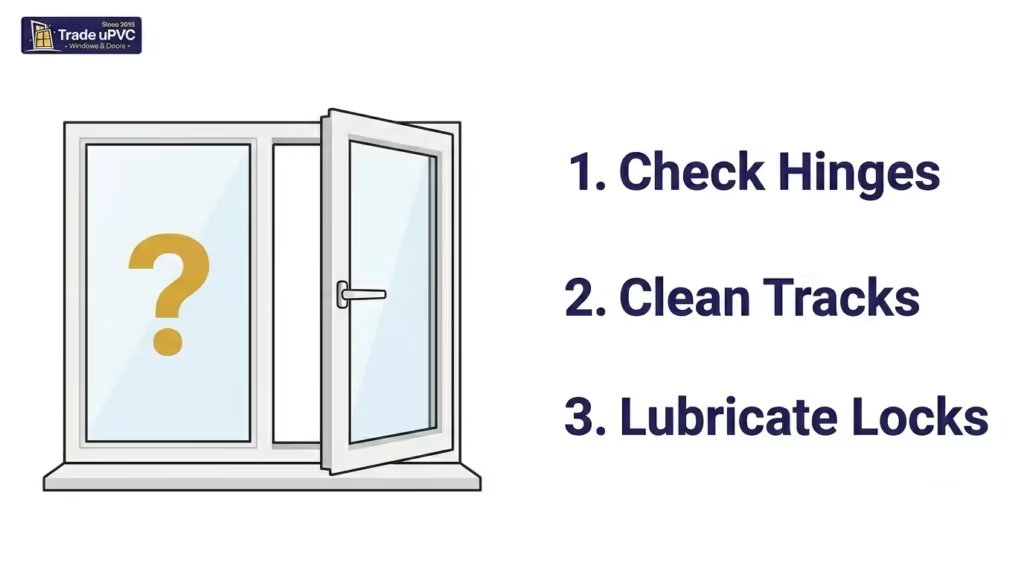
First, check whether your hinges are adjustable. Most modern UPVC windows use friction hinges with a small adjuster screw in the centre. Using an Allen key, you can turn the screw clockwise to pull the window inward, or anticlockwise to push it outward. Make small adjustments and test the window after each one.
If the hinges are visibly damaged or the adjustment does not help, it is time to replace them. You will need to note the hinge length, track width, stack height, and whether the window is side-hung or top-hung before ordering replacements.
2. A Stuck or Jammed UPVC Window
A UPVC window stuck shut is often caused by the rubber gasket, the seal that runs around the edge of the frame, becoming stuck to the frame itself. This usually happens when a window has not been opened for a long time, especially in warmer months when the rubber softens and bonds to the surface.
To fix this, you do not force the window open. This risks tearing the rubber, which would then need replacing. Instead, use a blunt, flat tool, an old bank card, or a flat-bladed butter knife, which works well, and carefully slide it around the frame to break the seal. Work slowly and gently all the way around.
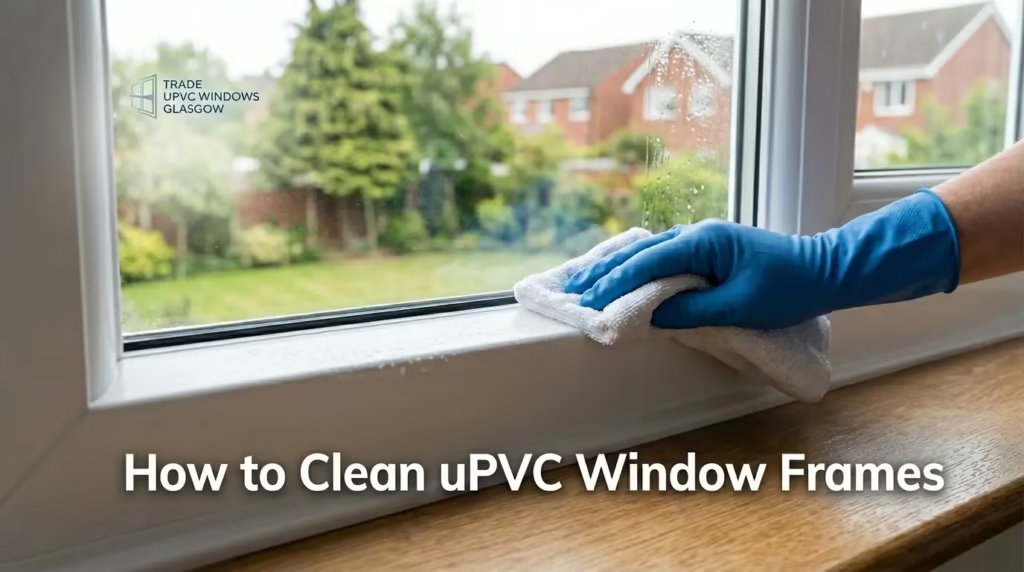
Once the window is open, clean both the gasket and the frame with warm soapy water using a soft cloth, then leave it to dry before closing the window again.
3. The Frame Has Expanded Due to Heat
If your UPVC window won’t open during warm weather, the frame itself may have expanded. UPVC is a plastic material that naturally expands when heated and contracts when cooled. Most windows are designed to handle a reasonable amount of this movement, but during unusually warm spells, the expansion can be enough to make the window stick.
This is completely normal and does not mean anything is broken. The window should return to normal once temperatures drop.
You can try cooling the frame down by wiping it with a cold, damp cloth or spraying it gently with cold water. This should encourage the uPVC to contract slightly and make the window easier to operate. Do not try to force the window open. Never apply heat to a stiff frame. This can cause permanent warping or cracking.
4. Dirty or Blocked Window Tracks
Dirt and debris collect in the tracks of the windows. What starts as dust can become enough of a blockage to prevent a window from fully closing or jamming the locking mechanism.
This is one of the most commonly overlooked problems of a UPVC window not opening or closing, and one of the easiest problems to fix.
To fix this, you need to use a stiff brush or a vacuum cleaner to remove loose debris from the tracks, frame, and around the locking points. For stubborn grime, a damp cloth with a mild household cleaner will do the job. Once the tracks are clean, test the window and see whether the problem has improved.
5. The Window Handle Won’t Close Fully
A window handle that won’t close fully or is stiff is usually caused by one of three things: a buildup of dirt around the locking mechanism, loose screws on the handle, or a worn handle that needs to be replaced.
Begin cleaning around the handle and locking mechanism. Look for screws on the handle plate and tighten them if they’re loose. If the handle still isn’t moving easily, try adding some silicone-based lubricant to the locking mechanism. Unlike oil-based sprays and WD40, silicone sprays won’t damage the locking mechanism over time.
If the handle is broken, cracked, or just spins with no function, it needs to be replaced. Replacement handles are cheap and readily available.
6. Misaligned Locking Points
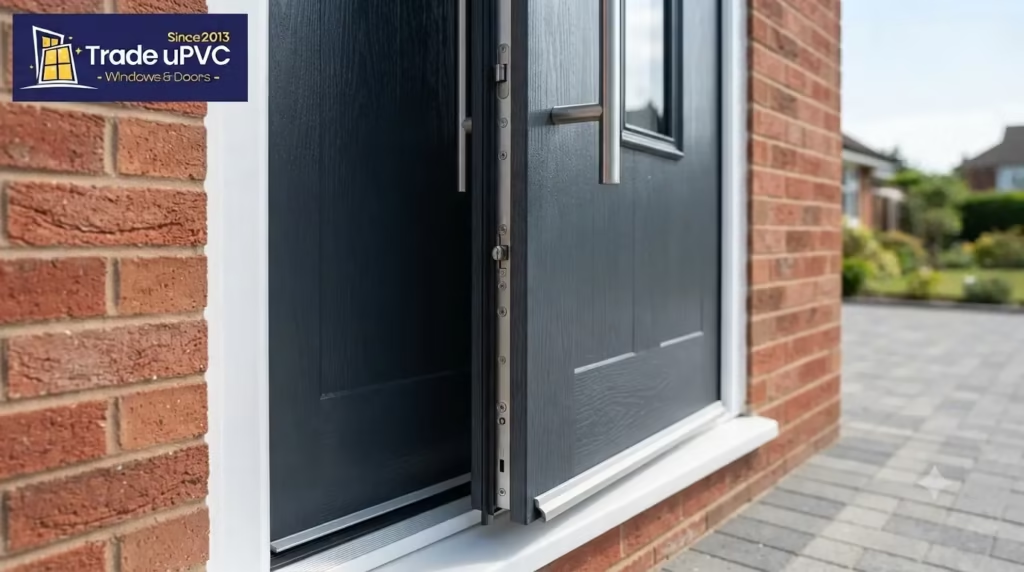
On a multi-point locking system, the locking bolts need to line up precisely with the receiver plates (also called keeps) on the frame. If the window has shifted slightly, even by a few millimetres, the bolts will no longer meet the keeps cleanly, making it hard or impossible to lock the window.
This can cause a UPVC window to not close, or could cause a window to lock with difficulty.
To better troubleshoot this problem, examine the receiver plates. If they are not aligned with the bolts, the plates can be adjusted by unscrewing, adjusting, and securing them again. If greater adjustment is required, the window hinges should be adjusted to align the sash within the frame.
How to Prevent These Problems?
A bit of regular maintenance goes a long way towards keeping your UPVC windows working smoothly for years.
- Clean the tracks and frames a couple of times a year to prevent dirt and debris from building up.
- Lubricate moving parts, hinges, handles, and locking mechanisms once a year using a silicone-based lubricant. Avoid petroleum-based products, as these can degrade plastic and rubber components.
- Open and close your windows regularly, even in winter. Windows that are left shut for months at a time are far more likely to seize up.
- Check the rubber seals periodically for signs of cracking, hardening, or shrinking. A damaged seal affects both how the window closes and how well it insulates your home.
When to Call a Professional?
If your UPVC windows are still jamming, not closing, or functioning poorly, despite doing what is suggested, it is time to consider external help. Some issues, like a drooped frame, a broken multi-point lock, or a warped sash, are outside the limits of personal adjustment.
Trade UPVC deals with these issues. Whether you need a window replacement or something easy to repair, we look at the problem and give the best options. We work with most UPVC windows and the replacement parts or window units to help repair them.
Do not leave a window that will not lock or close it is a security risk and can let in draughts and damp. Get in touch with Trade UPVC, and we will help you sort it out quickly.