Warping in a composite door is usually caused by extreme temperature fluctuations that affect the core, moisture seeping into exposed edges, or incorrect usage and hinge misalignment. While composite doors are highly durable, severe heat or moisture, or simply closing the door without lifting the handle, can cause them to bow, stick, or fail to lock over time.
That does not mean warping is inevitable. Composite doors are far more resistant to distortion than timber or uPVC, thanks to their multi-layered GRP construction and engineered core. But when something does go wrong, there is almost always a specific reason behind it. This guide covers the main causes, how to spot the early signs, and what you can do to fix it.
Do Composite Doors Warp?
In most cases, no. A properly installed and correctly used composite door is highly unlikely to warp. The manufacturing process fuses several reinforced layers under pressure, creating a single rigid structure that is far more resistant to moisture and temperature-driven movement than timber or uPVC alternatives, though not entirely immune.
That resistance, however, has its limits. Composite doors can warp, but it is almost always linked to something specific: poor installation, repeatedly closing the door without lifting the handle, or a lower-quality door to begin with. The good news is that most of these come down to things that are entirely within your control.
What Causes a Composite Door to Warp?
There is not just one reason a composite door warps. Usually, it comes down to one of the following:
Moisture Getting In
Moisture is one of the most damaging causes, and one of the easiest to miss. When water finds its way into the door through worn weather seals, gaps in the frame, or cracks in the sealant, it causes the door’s core material to absorb moisture and swell. Over time, that swelling leads to distortion.
This is particularly common in areas with heavy rainfall or high humidity, though it can happen anywhere if seals are left unchecked for too long. Keeping seals in good condition is the simplest way to stop this from happening. Check them at least once a year, and pay particular attention after a wet winter when wear tends to show up fastest.
Poor or Incorrect Installation
A door that has not been fitted properly is already at a disadvantage. If it does not sit flush within the frame, even small amounts of seasonal movement can put pressure on the hinges and the door leaf itself. That pressure, repeated over months and years, can lead to warping.
This is why getting a professional to install your composite door matters. It is not just about the look; it is about the door performing correctly over its lifetime.
Sun Exposure and Heat
Composite doors can expand slightly in high temperatures. This is normal thermal expansion and, in most cases, it is temporary; the door returns to its original shape as temperatures drop. Prolonged sun exposure is a different matter; UV rays gradually break down the door’s outer surface, weakening its resistance over time.
If your door faces south and gets a lot of direct sun throughout the day, consider adding shade or an overhang or choosing a door with a UV-resistant finish. One thing worth knowing: darker door colours absorb significantly more heat than lighter ones. A black or dark grey composite door in a south-facing position will get considerably hotter on a sunny afternoon than a white one. If you are dealing with sun-related bowing, the colour of the door could be making the problem worse.
Seasonal Movement
All composite doors move slightly between seasons; this is normal. In winter, central heating draws moisture out of the air and out of the door itself, causing it to contract slightly. In summer, the opposite happens, heat causes the door to expand.
On their own, these seasonal shifts rarely cause lasting damage. The problem comes when they act on a door that was already slightly misaligned from installation; in that case, each season makes the existing issue a little worse.
The Most Overlooked Cause — Slamming the Door Shut
Most people blame the weather when their composite door starts to warp, but the real culprit is often something they do every single day.
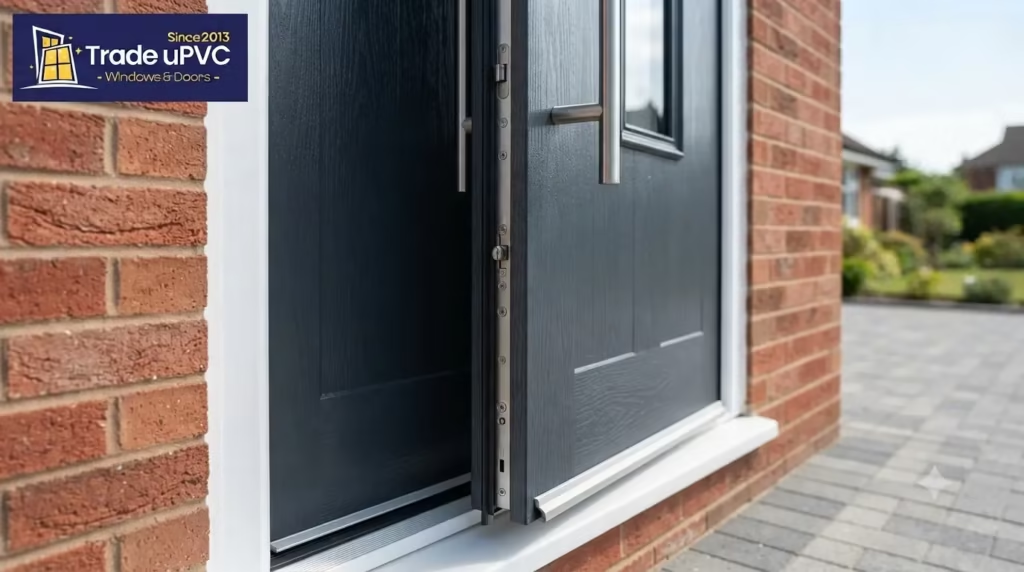
When you close a composite door without lifting the handle, the full weight of the door rests on the latch rather than being spread across the locking points. Over time, that concentrated load causes the door to drop out of alignment and begin to distort. The result is a door that gradually sits lower in the frame, starts to stick, and eventually will not lock properly, all from something as simple as not lifting the handle.
Problems With Composite Doors Beyond Warping
Warping gets most of the attention, but several other composite door problems are just as common, and some of them are easy to mistake for warping when the actual cause is something else entirely.
Stiff or Difficult to Lock
If your lock suddenly feels harder to engage, the most likely cause is dropped hinges. When a door drops even slightly, the locking mechanism falls out of line with the keep in the frame. A small hinge adjustment usually sorts this out quickly.
If the door still will not lock when held open, ruling out alignment entirely, the lock mechanism itself is likely faulty and needs a locksmith.
Draughts Coming Through
A draughty composite door usually means one of two things: the installation was not quite right, or the weather seals have worn down over time. Either way, it is worth addressing promptly. A draught is not just uncomfortable; moisture getting in through gaps is one of the primary causes of composite door warping, so it is worth fixing sooner rather than later.
Creaking Hinges
A creaking door is usually down to dry or worn hinges, or a door that is slightly too large for the frame. For hinge-related creaking, applying a silicone-based lubricant to the hinge points normally does the job. If the door is slightly too large for the frame, a professional fitter should assess whether the frame or the door itself needs adjustment; this is not a DIY fix.
Colour Fading
All exterior doors are exposed to UV light, rain, and temperature changes, composite doors included. The difference is they handle it far better than timber or uPVC, fading much more slowly over time. Some gradual color change after many years is normal. There is no specialist composite door polish, but a quality plastic restorer applied to the surface can noticeably refresh the color and restore the faded composite door appearance.
What Homeowners Actually Experience With Bowing
The technical causes of warping are one thing, but what composite door bowing actually looks like day to day is often worse than people expect.
One scenario that comes up regularly: a south-facing composite door that bows noticeably inward on sunny days, to the point where visible gaps appear at the top and bottom corners, and the lock will not engage with the frame. On a bad day, that gap can reach 10mm or more. At that point, heat is escaping, outside noise is getting in, and the door is no longer doing its job.
What makes this frustrating is that some installers and suppliers will wave it off as normal. The phrase “within tolerance” gets used a lot. Most manufacturers set the acceptable maximum bow at 3 to 4mm.
A few other things real-world experience points to:
- South-facing doors in dark colours are the most vulnerable. If your door is already bowing slightly, a hot summer can make it noticeably worse
- The lock not engaging properly is a serious sign. If bowing is severe enough that the locking mechanism cannot reach the receiver in the frame, that is beyond minor movement, the door needs attention
- Neighbouring doors with the same issue are a red flag. If multiple doors from the same installation are bowing, the problem is almost certainly with the door itself, not how it is being used
If a supplier tells you bowing is “expected” or “normal” for composite doors, push back. A composite door that has been properly manufactured and correctly installed should hold its shape. The 3 to 4mm tolerance exists to protect you, not to give suppliers a reason to dismiss a genuine problem.
How to Tell If Your Composite Door Has Warped
The simplest test is to hold a straight edge or spirit level against the face or edge of the door. Any gap between the straight edge and the door surface indicates distortion.
Other signs to look out for:
- Stiff or sticky locks: often one of the first things people notice
- Difficulty closing the door fully, especially if it has developed gradually
- Visible gaps around the edge, particularly at the top or bottom corners
- Draughts or cold air coming through: a sign that the door is no longer sitting squarely in the frame
If you spot any of these, do not leave them. Minor misalignment is straightforward to fix, but if left too long, it becomes a much bigger problem.
How to Prevent Your Composite Door from Warping
Most warping comes down to habits and maintenance, and both are entirely within your control. Here is what makes the biggest difference:
- Always lift the handle when closing the door. This engages the top and bottom locking points, which distribute the door’s weight correctly and keep it in shape
- Make sure the door is the right size for the frame. An oversized door that has to be forced shut puts unnecessary stress on the hinges and frame
- Check weather seals regularly. Worn seals are one of the main ways moisture gets in; replacing them when needed is a simple but important step
- Have hinges inspected periodically. Dropped hinges are an early warning sign that your door is under stress
- Always close the door properly: slamming it without lifting the handle is what causes the damage, not the force of closing itself.
- Shade the door if possible. If your door gets a lot of direct sun, fitting an external overhang or canopy reduces UV exposure and slows surface wear.
How Are Composite Doors Built to Resist Warping?
Composite doors resist warping through a multi-layered construction, each layer doing a specific job to counteract natural expansion, contraction, and moisture, making them significantly more stable than timber or uPVC vs wooden door under the same conditions. Each layer plays a specific role:
| Component | What It Does |
| GRP (Glass Reinforced Plastic) outer skin | Forms a tough, moisture-resistant shell that stops water from reaching the core |
| High-density foam or timber core | Provides structural rigidity and thermal insulation |
| Engineered timber laminates (LVL) | Adds strength and dimensional stability across the full height and width |
| Aluminium reinforcements (where used) | Adds rigidity to the frame and helps the door hold its shape |
| Integrated drainage system | Allows any water that collects around the door to escape rather than pool |
It is this layered construction, fused under pressure, that gives composite doors their stability. Timber and uPVC doors rely on a single material each, both of which respond directly to moisture and temperature in ways that composite construction is specifically designed to resist.
How to Maintain a Composite Door
Unlike timber doors, which need painting, staining, and weatherproofing every few years, a composite door asks very little of you. It simply needs:
- Occasional washing with warm soapy water to keep the GRP surface clean
- Periodic lubrication of locks and hinges to keep everything moving smoothly
- Regular inspection of weather seals, replacing them when they show signs of wear
That is genuinely all that is needed to keep a composite door in good condition for 30 years or more. If you are based in Glasgow and need a professional to check or replace your composite door, Trade uPVC Windows offer composite door supply and installation across the central belt of Scotland, all fitted with multi-point locking mechanisms and built to British security standards.
FAQs
Are composite doors guaranteed not to warp?
No door comes with a guarantee against warping, but composite doors come close. Their multi-layered GRP construction and pressurised manufacturing make them significantly more resistant than timber or uPVC. In the vast majority of cases, a well-made, correctly installed composite door will not warp due to weather exposure alone.
What causes a composite door to warp?
The most common causes are moisture infiltration through worn seals, incorrect installation, prolonged sun exposure, and, most commonly, repeatedly closing the door without lifting the handle, which places the door’s weight on the latch over time.
Can a warped composite door be fixed?
It depends on the extent of the warping. Minor distortion caused by dropped hinges or misalignment can often be resolved by adjusting the hinges or resealing the frame. If the warping is more severe, a complete replacement may be required. The first step is to get a professional evaluation.
Does heat or direct sunlight cause composite doors to warp?
Yes, it can contribute, particularly with darker door colours that absorb more heat. In most cases, composite doors warp temporarily during very hot weather and return to shape as temperatures drop. The surface of GRP can become weak over several years, particularly if exposed to the sun and in shades of dark blue, dark brown or black. This can be assisted by using a lighter shade or colour.
How do I prevent my composite door from warping?
The most important habit is lifting the handle every time you close the door. Regular seal checks, proper installation, and periodic hinge inspections all help too; full details are covered above.
Final Thoughts
Do composite doors warp? Rarely, and when they do, there is almost always a specific reason behind it. Whether it is a worn seal, dropped hinges, or simply closing the door without lifting the handle, most causes of composite door warping are preventable with a bit of awareness and routine maintenance.
A well-made composite door, correctly installed and looked after, should stay straight, secure, and fully functional for decades. If yours is already showing signs of trouble, the cause is almost always identifiable, and in most cases, fixable without a full replacement.
Still Not Sure What Is Wrong With Your Door?
If you want to troubleshoot further, ask yourself these three questions; the answers will help you pinpoint exactly what is going on:
- What is your door actually doing? Is it rubbing at the top, refusing to lock, or are there visible gaps around the frame? The exact problem tells you where to start
- Is your door exposed to direct sunlight during the day? A south-facing door in a dark colour is far more likely to bow in warm weather
- Are the weather intact around the edge of the door, or are they cracked and worn? Damaged seals are one of the most common and most overlooked causes of warping and draughts
Once you have a clear picture of what the door is doing, you can match it to the relevant section above to find the right fix, whether that is a hinge adjustment, a seal replacement, or a call to a professional installation.