Burglars target doors more than any other part of the house, and most of the time it’s not the door itself that gives way; it’s the lock. Roughly 76% of break-ins happen through a door, and about a third of those happen because someone forced the cylinder open rather than damaging the frame.
That’s really the whole story behind upvc door security: get the cylinder right, back it up with a couple of cheap, visible upgrades, and you’ve closed off the two tricks burglars rely on most, lock snapping and cylinder bumping. Here’s how to secure a door properly, six steps, in roughly the order they’re worth doing.
Are uPVC Doors Safe in the First Place?
Generally, yes, but it depends on the age and quality of the door. A modern uPVC door fitted with a proper multi-point lock and a half-decent cylinder is genuinely hard to force open. Joiners and fitters on forums like r/DIYUK will tell you the same thing: multi-point locks spread the load across several points along the frame, which makes kicking or ramming a door open far harder than people assume.
Older doors are a different story. Some doors from years back only have a handful of tiny rollers holding them shut, and if the frame has shifted over time, even those might not be making proper contact anymore. That’s the real weak spot, not the uPVC itself, but the lock and hardware fitted to it. Once you know that, securing upvc doors becomes a much simpler job, you’re not reinforcing the door, you’re upgrading specific parts.
Step 1: Upgrade to an Anti-Snap Cylinder
This is the single biggest upgrade you can make to your upvc door security, because the cylinder is what criminals actually target, not the door.
Standard euro cylinders have a well-known weak spot called lock snapping. Someone removes the casing, exposes the cylinder, then snaps it in half with basic tools, sometimes in under 10 seconds. It became enough of a problem that police forces ran a national campaign on it, working with the British Standards Institution and Secured by Design to set minimum standards for replacement cylinders.
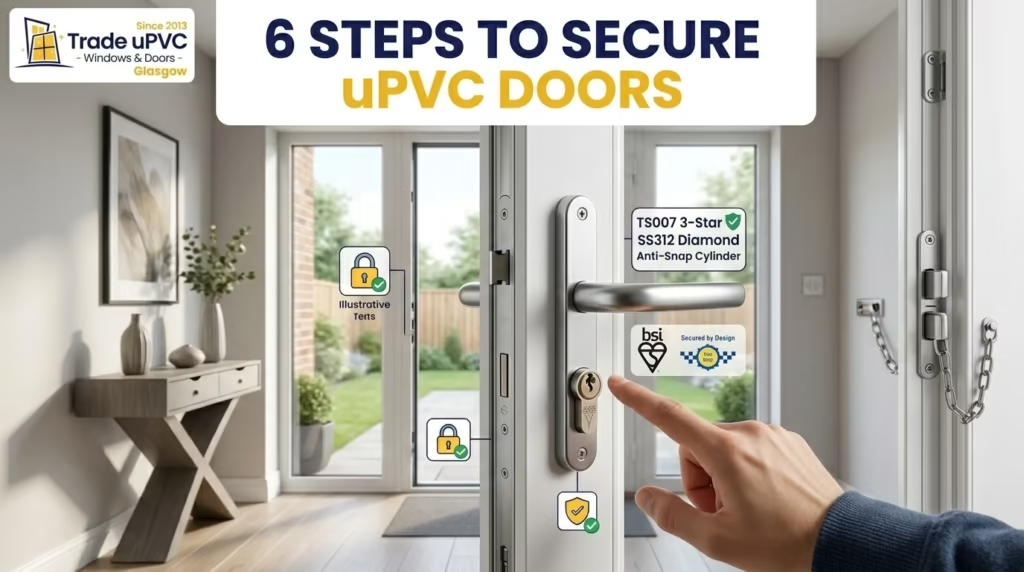
When you’re buying a new one, look for a cylinder rated either TS007 3-Star (the BSI Kitemark rating) or SS312 Diamond (the Master Locksmiths Association / Sold Secure rating). Both mean the cylinder has been tested against snapping, picking, drilling and bumping. A locksmith will usually charge from around £60 for the cylinder on its own, or from £130 supplied and fitted. While they’re in there, it’s also worth asking about an anti-drill plate behind the gearbox. It’s a small add-on but worth doing while the door’s already being worked on.
Step 2: Make Sure Your Multi-Point Lock Is Actually Doing Its Job
A multi-point lock only works if it’s fully engaged, and a lot of people don’t realise they’re only using the latch.
Most uPVC doors lock at several points along the frame (hooks, bolts or rollers) rather than just one spot. That spreads the force out, so anyone trying to force the door is pushing against the whole frame, not a single weak point. But if you just pull the door shut without lifting the handle and turning the key, you might only be engaging the latch, leaving the rest of the locking points doing nothing at all.
While you’re checking that, give the door a proper push and a wiggle of the handle too. It should feel heavy and solid when you open it, not hollow, and there shouldn’t be any flex in the door or wobble in the handle. If it does flex or wobble, the problem usually isn’t the lock itself; it’s that the frame has shifted slightly or the door needs realigning. That’s worth sorting first, because no upvc door security upgrade on this list will help much if the door isn’t sitting properly in its frame to begin with.
Step 3: Fit a Security Handle and Cylinder Guard
A security handle does two jobs at once: it covers the protruding part of the cylinder so there’s nothing for an intruder to grip with snapping tools, and it’s built thicker and stronger than a standard handle, so it can’t be snapped off either.
If you’d rather keep your current handle, a separate cylinder guard does a similar job on its own; it just clips or screws over the lock to hide the vulnerable part.
Either way, check that whatever you’re buying is rated TS007 2-Star or carries Police-approved Secured by Design accreditation. A decent security handle costs from around £50 for supply only, and it’s worth getting it fitted by a locksmith rather than doing it yourself; fitting usually starts from about £110.
Step 4: Install Sash Jammers
A sash jammer is a small lever that pivots over the edge of the door, so even if the main lock gets forced open, the door still won’t budge.
You’ll usually want two fitted, one near the top and one near the bottom. Non-locking versions are operated by hand from the inside only, which is fine day to day but can be a problem if someone falls and needs help getting in. Locking versions can be operated with a key from the outside as well, so they’re worth considering if that’s a concern for your household.
Sash jammers are inexpensive on their own, from around £12 each, but correct fitting matters more here than with most upgrades on this list, so it’s worth getting a locksmith to do it rather than fitting them yourself.
Step 5: Add Hinge Bolts
Most break-in attempts target the lock side of the door, but if you’re after additional security for upvc doors, the hinge side matters too, especially on older outward-opening doors.
Hinge bolts, sometimes called dog bolts, stop the door from being forced off its hinges even if someone manages to lever the hinge side away from the frame. They’re fitted roughly a quarter of the way down from the top and up from the bottom of the door, but not within 150mm of the hinges themselves. While you’re at it, check there’s no visible gap on the hinge side either, even a thin one is enough for someone to get a tool in.
They’re also one of the cheapest upgrades here, a pack of two costs from around £12 supply only, and any competent locksmith or joiner can fit them in a few minutes.
Step 6: Add a Door Chain and Letterbox Guard
These two are smaller upgrades, but they cover gaps the steps above don’t.
A door chain, or chain restrictor, lets you see who’s at the door before you open it fully, which matters most if you live alone or have someone vulnerable in the house. Look for one tested to the TS003 standard, and make sure it’s fitted with proper screws rather than the flimsy ones some chains come with; otherwise, it’ll come away from the frame under force. Expect to pay around £24 for a decent one. If you’d rather skip the chain altogether, some people fit a turn-knob style entry guard instead, since a chain can be broken more easily than most people assume.
A letterbox guard, sometimes called a fishing guard, stops a trick where someone pushes a long hooked rod through the letterbox to fish keys off a table in the hallway. Look for one rated TS008, and as a habit, just don’t leave your keys anywhere near the front door.
On their own, neither of these will stop a determined intruder. Think of them as the last layer on top of everything else, not a substitute for the cylinder upgrade in step 1.
uPVC Door Security Upgrades at a Glance
| Upgrade | Standard to look for | Approx. cost (supply + fit) |
| Lock cylinder | TS007 3-Star or SS312 Diamond | From £130 |
| Security handle | TS007 2-Star | From £110 |
| Sash jammers (pair) | – | From £24 |
| Hinge bolts (pair) | – | From £12 |
| Door chain | TS003 | From £24 |
| Letterbox guard | TS008 | cost |
Prices are a guide only and will vary depending on your locksmith and door type.
Don’t Skip Professional Installation
None of this matters much if the door isn’t fitted properly in the first place. If the keeps (the parts the bolts and hooks lock into on the frame) aren’t lined up correctly, or the door has dropped slightly over time, the locking points won’t fully engage even with the best hardware in the world.
If you’re buying a brand new uPVC door rather than upgrading an existing one, ask whether it’s PAS 24 certified. That’s the UK security performance standard for door sets, and it covers the whole door, not just the lock, so it’s worth asking for the paperwork rather than taking “high security” as just a marketing claim.
A quick way to check if your current door is doing its job:
- Does it close firmly with no rattle or bounce?
- Does it feel solid when locked, with no movement in the handle?
- Is the cylinder sitting flush rather than sticking out?
- Are the hinges tight, with no loose screws?
- Does the key turn smoothly without you needing to force the handle?
If you’re based in Glasgow or anywhere across the central belt of Scotland, this is the kind of thing Trade vPVC Windows & Doors deals with every day. Their uPVC doors come fitted with a multi-point locking mechanism as standard, built to British security standards from the start, so you’re not stuck retrofitting half of this list further down the line.
Frequently Asked Questions
Q1: Are vPVC doors secure enough for home security?
Yes, as long as the hardware is up to standard. A uPVC door with a multi-point lock and a TS007 3-Star or SS312 Diamond cylinder is genuinely secure. The door material was never really the issue; UPVC door security mostly comes down to the cylinder and how well the door is fitted.
Q2: What are the most effective ways to improve UPVC door security?
Start with the cylinder; that’s where most break-ins happen. After that, a security handle, sash jammers and hinge bolts all add a meaningful extra layer without costing much.
Q3: What is the biggest weakness of a UPVC door?
The euro cylinder lock. Standard ones are vulnerable to lock snapping, and once that’s broken, an otherwise strong multi-point lock becomes pretty much useless.
Q4: Can a UPVC door be kicked in easily?
Not if it’s got a properly engaged multi-point lock, those spread the force across several points along the frame, making kicking it open genuinely difficult. Older doors with worn or misaligned locking points are a different story, so it’s worth checking yours is still engaging fully.
Q5: Do UPVC doors meet home insurance security requirements?
Often, yes, but it depends on your policy, so it’s worth checking the exact wording rather than assuming. A uPVC door with a multi-point lock and a 3-star cylinder (TS007 or SS312) is generally seen as good security, which is what most insurers are looking for. Keeping a fitting certificate from your locksmith or installer is a sensible backup in case it’s ever needed.
Final Thoughts
None of these six steps needs to happen all at once, and you don’t need to spend a fortune to see a real difference. Start with the cylinder since that’s where most break-ins actually happen, then work through the rest as your budget allows.
Get those six right, and upvc door security stops being a guessing game. You’re not hoping the door holds; you know it will.