Walk down any street in Glasgow, or anywhere in the UK for that matter, and uPVC doors are everywhere. They’ve completely replaced the old timber doors that used to be standard in most homes. But ask most people what uPVC doors are actually made of, and you’ll get a blank stare.
So here’s a proper breakdown. What are uPVC doors made of, what goes into their construction, and why does it actually matter when you’re choosing a new door? Let’s get into it.
What Is uPVC, Exactly?
uPVC stands for unplasticised polyvinyl chloride. The important part of that name is “unplasticised”; it means no softeners have been added during manufacturing. That’s what makes uPVC rigid and tough, rather than bendy like a plastic bag.
The material is made from a vinyl polymer that gets chemically bonded to chlorine atoms. This gives it that hard, weatherproof quality you see in window frames and door profiles across the country. Steel or aluminium inserts are embedded within the uPVC profile to add structural rigidity and strength to the door frame.
So when you look at a uPVC door, you’re not just looking at plastic. You see a well-built unit that will resist warping, rotting and fading for decades due to rain, wind and temperature changes.
What’s Actually Inside a uPVC Door?
That’s where everyone will be caught off-guard. A uPVC door is not just a single piece of material; it’s the combination of a number of parts. Here’s what you’ll find when you look at what uPVC doors are made of, layer by layer:
The Outer uPVC Skin: Two sheets of uPVC are heat-pressed into a mould to create the outer panels. This is what gives the door its shape, finish, and colour. These outer skins are no longer what they used to be, and are now available in wood-effect, dual-coloured and a variety of solid colours. Modern uPVC doors have moved well beyond the plain white plastic look of the past.
The Insulated Inner Core Sandwiched between the outer layers is a dense central section that provides thermal insulation. This prevents heat from escaping through the door itself and it’s a key reason that uPVC doors are so efficient for energy.
Steel or Aluminium Reinforcement Inside the uPVC profile, there’s a reinforcing steel or aluminium insert. This is what gives the door its structural rigidity and resistance to forced entry. Without it, the uPVC frame alone wouldn’t be strong enough for an external door. For instance, at Trade UPVC Windows, all exterior front and back doors are fitted with fully reinforced frames as standard, due to the amount of difference it makes to both security and lifespan.
The Glass Unit Where the door has glazed panels, a sealed unit, usually double-glazed, is placed in the centre and locked in with beading. Instead of the old aluminium edge spacer bars, many modern units have warm edge spacer bars, which greatly reduce heat loss around the edge of the glass.
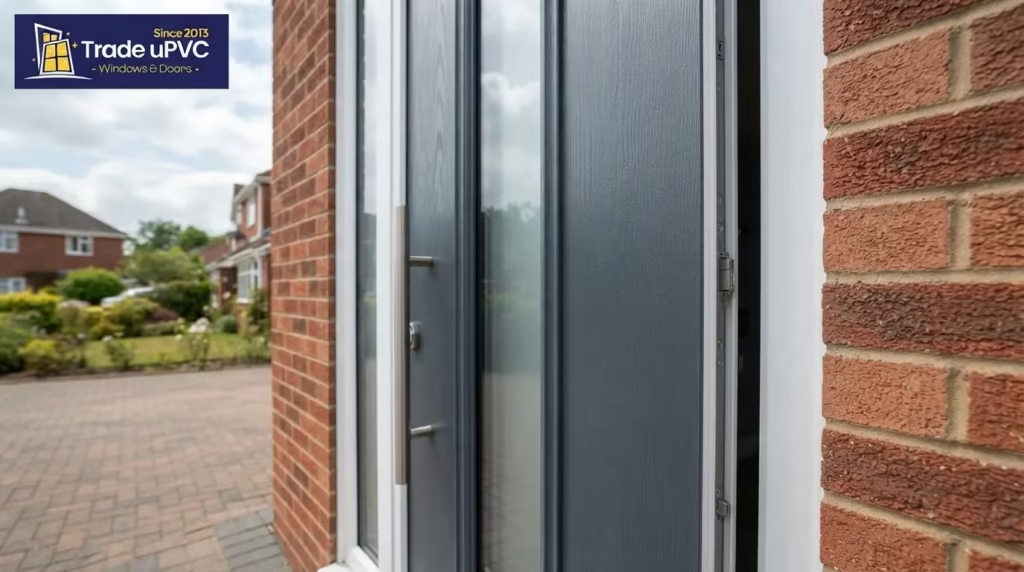
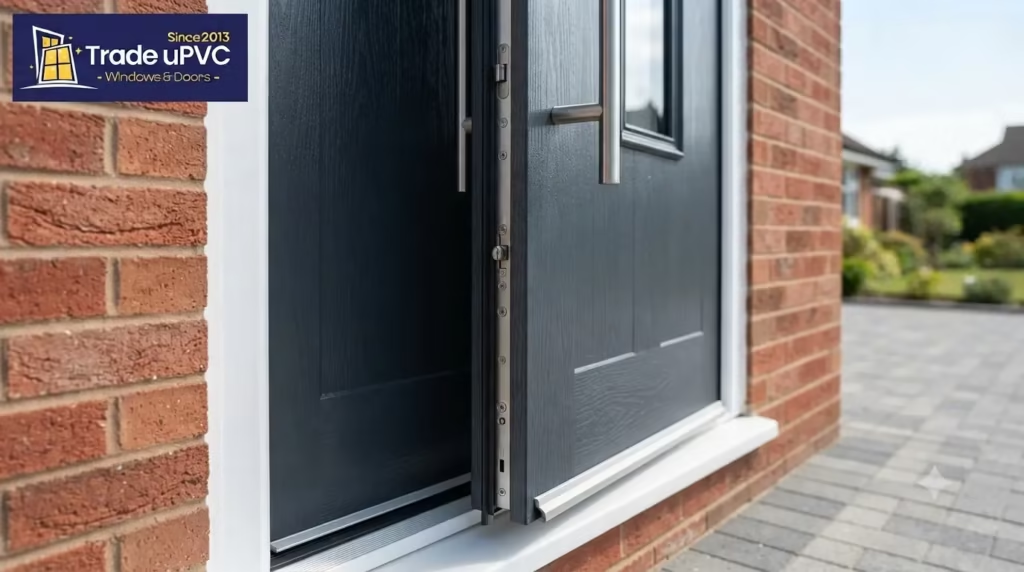
The Sash, Frame, and Hardware: The door panel sits inside a sash (a sturdy uPVC brace), which is then fitted to the outer frame using hinges. When it is equipped with a multi-point locking system, weatherseals and handles, then it’s finished.
How Does uPVC Compare to Other Door Materials?
It’s helpful to compare uPVC with the options. Let’s take a quick look at a simple comparison:
| Material | Durability | Maintenance | Energy Efficiency | Security |
| uPVC | Very High | Very Low | Very High | High |
| Wood | Medium | High | Medium | Medium |
| Aluminium | High | Low | Low | High |
| Composite | High | Low | High | Very High |
Wood has a traditional appeal, especially on older properties. But it absorbs moisture, swells, warps, and needs repainting or resealing every few years. Aluminium conducts heat easily, which makes it less thermally efficient and not ideal for Scottish winters. Although the performance of composite doors is excellent, they are much more expensive than uPVC doors.
uPVC is a great option for most people who want the warmth of a door without the hassle of a lot of maintenance, and just want a nice-looking door that keeps the heat in.
Why the Material Choice Actually Matters
Here’s something worth thinking about. Because uPVC doesn’t absorb water, it won’t swell or warp when exposed to rain, which is a constant reality in Glasgow and across Scotland. It’s also UV stable, so it doesn’t fade or discolour quickly in the sun.
The multi-chamber profile design used in quality uPVC frames is worth mentioning too. These hollow chambers inside the frame trap air, which acts as a natural insulating barrier. The more chambers in the profile, the better the thermal performance, and in turn, the lower your heating bills.
That’s one reason businesses like Trade UPVC Windows specifically use REHAU uPVC profiles, which are engineered with thermal performance and durability in mind. The material underneath the surface matters just as much as how the door looks from the outside.
Are uPVC Doors Energy Efficient?
Yes, genuinely so. The combination of the insulated uPVC frame, double-glazed units, and tight weather seals creates a well-sealed barrier around your door. Many uPVC doors achieve an A-rating for energy efficiency, which means they meet a high standard for heat retention.
A few things affect how well your door performs thermally:
- Double vs triple glazing: Triple glazing is worth considering if you’re in a colder area or near a noisy road. It reduces heat loss more effectively than double glazing, though it does add a bit of weight to the door overall. For homes in Scotland especially, the advantages of triple glazing are hard to ignore; it makes a real difference in keeping rooms warmer through winter.
- Gas-filled units: Argon-filled glazing outperforms standard air-filled double glazing on thermal efficiency.
- Warm edge spacer bars: These sit between the panes and reduce heat escaping through the edges of the glass unit.
- Weatherseals: The rubber seals around the door frame do a lot of the heavy lifting when it comes to keeping draughts out. They’re worth checking every couple of years to make sure they’re still in good shape.
Does triple glazing make a difference? For most Scottish homes, yes, particularly if your current windows or doors are old. Triple glazing reduces condensation on interior glass surfaces too, because the inner pane stays warmer. So if you’ve had issues with misted-up glass or damp patches around frames, upgrading to triple-glazed units can genuinely solve that.
Security: Is uPVC Actually Strong Enough?
This is a fair question, and it comes up a lot. The honest answer is that a well-made uPVC door with proper reinforcement is very secure.
The steel frame inside the uPVC shell makes it far more resistant to forced entry than it looks from the outside. And quality uPVC doors are fitted with multi-point locking systems, which lock the door at several points along the frame simultaneously, rather than just at the handle. That’s a major step up from the single-point locks you’d find on older timber doors.
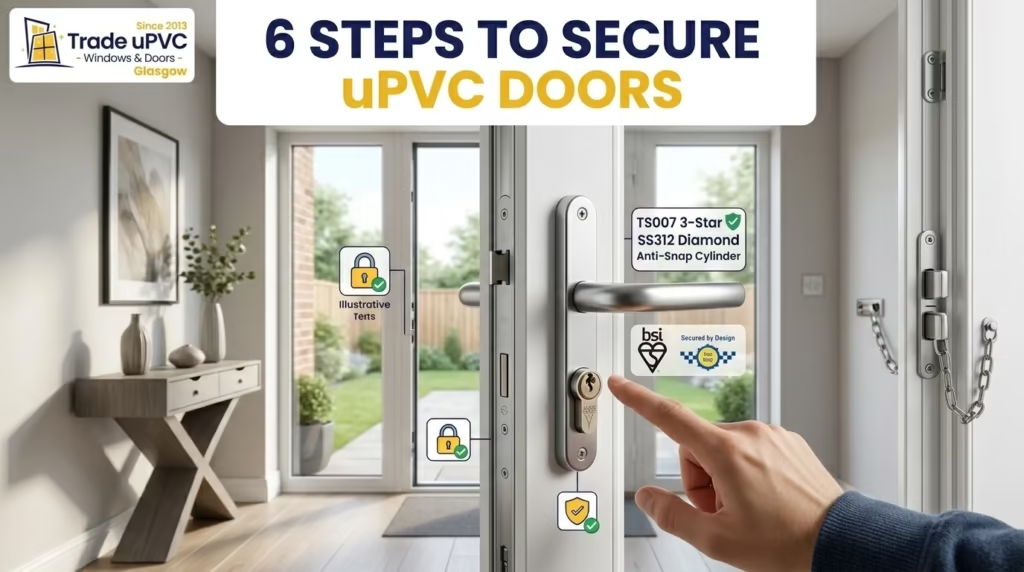
Trade UPVC Windows fits all their external doors with multi-point locking mechanisms as standard, in line with British security standards. Some doors also come with anti-snap lock cylinders, which protect against one of the most common break-in techniques used on uPVC doors.
Colors, Styles, and What’s Available
One of the biggest changes in uPVC doors over the last decade is the range of options available. It’s not just white anymore. Here’s what you can typically choose from:
- Solid colours: white, cream, grey (light and anthracite), black, green, blue
- Wood grain foils: oak, rosewood, golden oak, mahogany
- Dual colour finishes: one colour on the outside, a different one on the inside
Hardware can be customised too; handles, letterplates, knockers, and hinges are available in chrome, gold, graphite, and antique black finishes. So whether you want something classic or something a bit more modern, there’s plenty of room to make the door your own.
Available in a huge range of colours and styles to suit a range of home styles, at Trade UPVC Windows Glasgow, you can expect to find all kinds of front and back doors as well as French doors, patio doors, bifold doors and more in composite or PVC.
How Long Will a uPVC Door Last?
People often ask what uPVC doors are made of precisely because they want to know how long they’ll last. The answer is reassuring: a properly installed uPVC door typically lasts between 20 and 35 years. Frequently, the frames are as long-lasting as the glass units and will last the life of the glass, often guaranteed for 10 years against the failure of the seal (the cloudiness that develops between the panes with time because the seal breaks down).
Maintenance is straightforward:
- Clean the frames with warm soapy water when needed
- Lubricate hinges and locking points once a year with a light oil
- Check the rubber seals every couple of years and replace if cracking
Well, that’s all it takes. No painting, no rot treatment, no rot worries.
FAQs
What are uPVC doors made of?
uPVC doors are made from unplasticised polyvinyl chloride, a rigid, weatherproof plastic, combined with a steel or aluminium internal frame, an insulated core, and double or triple glazed glass units. The complete construction provides the door with strength, thermal insulation and durability.
What’s the difference between PVC and uPVC?
PVC has plasticisers added to make it flexible; it’s what you’d find in things like hoses or electrical cable sheathing. uPVC contains no plasticisers, making it rigid and suitable for structural applications like doors and window frames.
Is uPVC the same as plastic?
Technically, yes, but it’s a very specific type of hard plastic. The unplasticised version is much harder and more resistant to weathering than normal plastics. Don’t think of it as plastic, think of it as a designed building material.
Can uPVC doors be painted?
They can, but factory-finished colours and foils last significantly longer than a painted finish applied after the fact. If you want a specific colour, it’s much better to choose it during the manufacturing process.
Are uPVC doors suitable for older properties?
Yes, especially if you choose a wood-grain finish that maintains a traditional look. However, certain old period houses look better with composite doors; it is best to check the options before making a decision.
How often do uPVC doors need maintenance?
Very rarely. They require only an occasional clean, yearly lubrication of hinges and locks and a check of the weather seals every couple of years. No sanding, painting, or treating necessary.
Final Thoughts
What are uPVC doors made of? The short answer is unplasticised polyvinyl chloride, steel reinforcement, an insulated core, and sealed double or triple-glazed glass. But the longer answer is that the material combination is what makes these doors so practical. They don’t expire, are energy efficient, safe, and actually easy to maintain. If you’re in Glasgow or the central belt of Scotland and thinking about replacing your front door, back door, or any external door, Trade UPVC Windows offers a full range of A-rated uPVC doors, manufactured using REHAU profiles, fitted with multi-point locking systems, and backed by a 10-year warranty. Call them on 07723 363366 or drop in to their Glasgow office in 48 West George Street, Glasgow, G2 1BP for a free consultation.