Are Composite Doors Better Than uPVC? A Simple Comparison Guide for Homeowners
Selecting an appropriate front entrance door is beyond style; it also helps your house’s security, warmth, and comfort. Are composite doors better than uPVC, or does uPVC remain a good budget option? — So many owners question. And that’s quite common because both types are prevalent and recommended.
The reality is that all of these doors have their own merits. UPVC doors are relatively cheaper and easier to maintain, whereas composite doors offer long-lasting durability and feel much more premium. We will have a simple breakdown so you can see the differences easily – and make a clear decision about which option would work best for your home with little to no confusion.
Are Composite Doors Better Than uPVC? Key Differences Explained
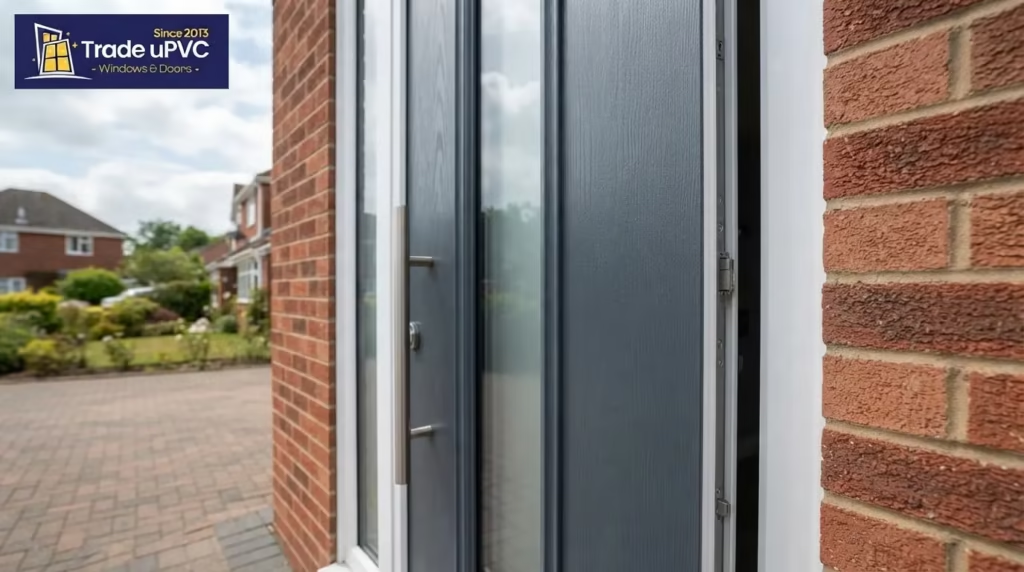
If you are asking yourself in your hall, hallway, or porch, are composite doors better than uPVC? The answer will depend on everything that is best for you. Composite doors are generally a more premium choice as they offer better strength, security, and insulation. However, uPVC doors are still regularly seen in homes because they have a low cost of entry, demand for little to no upkeep, and often serve families that require only basic lifestyle wants.
Security & Strength
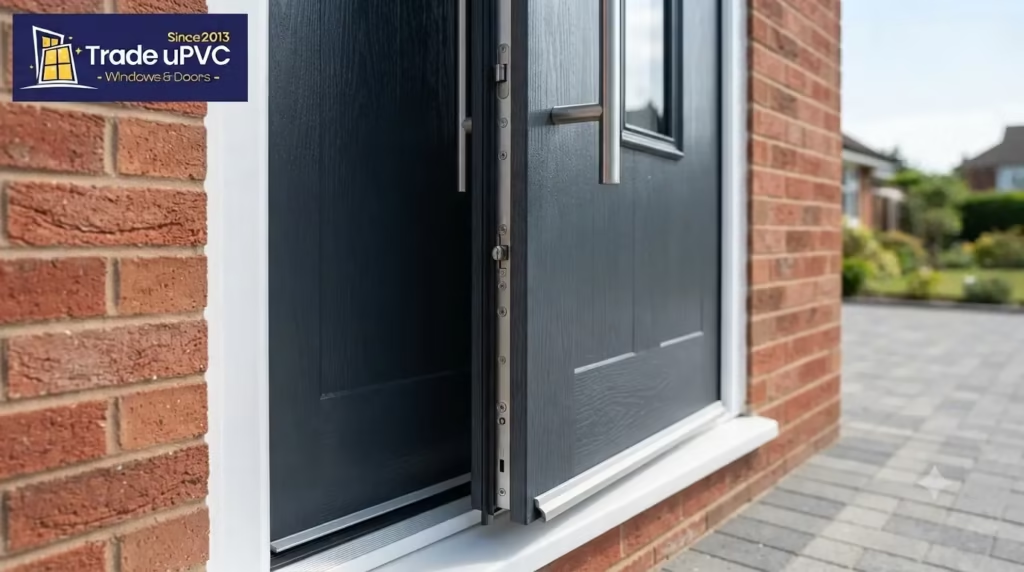
Due to its solid core and hard exterior, composite doors are much more like a fortress from a break-in. In comparison, uPVC doors are lighter and not as rigid.
Durability & Lifespan
Composite doors have a lifespan of 30 years or more, with limited wear and tear when synthetic materials are used, whereas uPVC door panels can last up to 20–25 years before colour loss occurs.
Energy Efficiency
Both doors are well insulated, but composite doors are great due to their core thickness, which helps your house stay warm and allows for less heat loss.
Appearance & Design
Composite doors provide a more authentic wood appearance, with nearly every colour and design available. And with a more plastic-like finish and limited designs, uPVC doors appear less complex.
Cost
uPVC doors are more budget-friendly and ideal if you want a lower upfront cost. Composite doors are more expensive but offer better value in the long run.
What are uPVC Doors in the UK?
uPVC doors are a popular alternative to traditional wooden doors, especially in UK homes. uPVC door is a preferred choice for people in UK homes, too, as it offers many benefits over the traditional wooden counterparts. Made from a very strong and durable material known as Unplasticized Polyvinyl Chloride, uPVC is the colorless counterpart of polyvinyl chloride (PVC). These doors are built to cope with the shift in UK weather conditions whilst also being able to keep your home warm, safe, and energy efficient.
uPVC is very versatile, affordable, and one of the key reasons why homeowners opt for it. They come in a variety of colours and pantones & styles, even wood-effect finishes to achieve that timeless look with minimal upkeep. The difference between a uPVC and a composite door is that a uPVC door is more suited to daily life due to its practicality and cost-effectiveness.
Advantages and disadvantages of UPVC doors
So it is essential to know the pros and cons of composite or uPVC doors before finalizing on any one type. This helps you differentiate your uPVC door and composite door clearly and select what is best suited for your home.
Advantages
- Low Maintenance: Do not paint or seal regularly.
- All Weather ready: Able to withstand the UK rain, wind, and shifts in temperature.
- Flexible Styles: Comes in a variety of colors and styles.
disadvantages
- Not as Strong – More prone to scratches than composite doors, not as sturdy.
- Basic Look: Cannot guarantee a sturdy impression as compared to composite doors.
- Requires Professional Installation: A professional might need to be used for installation; this increases costs.
What Are Composite Doors in the UK?
Composite doors are the modern, high-performance option manufactured from multiple materials like GRP (glass reinforced plastic), timber, and uPVC. This combination produces a solid, robust, and weather-resistant door that is becoming increasingly popular as an enhanced secure option for traditional timber doors in UK houses.
Composite doors are favoured by most homeowners for the high-quality feel they give, together with superior strength and insulation. Composite doors tend to be regarded as a more secure and durable alternative when compared with uPVC doors. They are built to withstand the rigors of everyday life and the damp UK climate, but will still look fresh for years.
Advantages and disadvantages of composite doors in the UK
When you are doing some research to determine if composite doors are better than uPVC doors, it is a good idea to read through the advantages and disadvantages before making your decision.
Advantages
- Security: These are layered by layers and are locked in very strong systems until the last layer, which can make them most secure of all.
- Very Low Maintenance: No painting or constant maintenance required.
- Life Span: Can live up to 30–35 Years with proper maintenance.
Disadvantages
- Costlier: Costing more than uPVC and regular wooden doors.
- Full Replacement Required—If an individual component is damaged beyond repair, it will necessitate a larger replacement.
- Fitting Price: Composite doors require professional fitting that comes with a higher cost too—factor in the installation price difference between uPVC and composite doors
Overall, when weighing up uPVC versus composite doors, you are investing solidly in a strong product for homeowners who value security, durability, and long-term value.
uPVC vs Composite Doors in the UK – which is better composite or uPVC doors
These are the two most popular choices for UK homes when comparing uPVC vs composite doors. There are pros and cons to each, which is why many homeowners find these two options confusing.
If you are looking for a more economical version, uPVC doors are typically the go-to. They are cost-effective, low-maintenance, and reasonably durable for casual wear. Although when rated against composite or uPVC doors, composite doors are generally of a much stronger frame and have superior performance.
Composite doors offer better insulation, security, and a higher-quality finish. They also clean easily and can last roughly 30 years, a long-term investment. In theory, this implies that uPVC doors have a long potential lifespan; however, most manufacturers will guarantee them for shorter periods than the guarantees offered on composite alternatives, and it is likely that they won’t last as long in real situations.
In short, uPVC is good if you are mainly concerned about budget. However, for those who crave a stronger door with better insulation and value over the years, composite doors are often superior when compared to their competitors in most regions of the UK.
If you need help in choosing the right type that fits your home, style, and budget, then Tade uPVC can offer professional advice and an expert installation.
Conclusion
The best door for your home will be compatible with the style, budget, and practical requirements of your property. That is why comparing the pros and cons can be a good idea before making a final decision.
Composite doors are, however, usually a more expensive option, but also provide a higher quality aesthetic look, build, and longer-lasting. On the other hand, a uPVC door is less expensive, requires very little maintenance, and still offers good efficiency about security and energy.
When weighing uPVC vs composite doors, both are viable choices based on your needs—cost or long-term functionality. Ultimately, the right choice simply boils down to your needs at home and what you can afford. So, if you want to decide accurately for uPVC installation in the UK, Trade uPVC has the right professionals for your assistance.
Faqs
1. Which is better in uPVC versus composite doors?
Composite doors tend to offer better security, insulation, and durability than uPVC doors, but overall, uPVC doors are a more affordable alternative.
2. What is the main difference between uPVC and composite doors?
The main difference is the construction — composite doors have a solid, multi-layer core, while uPVC doors are lighter and hollow inside.
3. Are composite doors more secure than uPVC doors?
Yes, Composite doors are generally more secure due to their more robust construction and improved locking systems.
4. Which is more cost-effective: uPVC or composite doors?
Composite doors can cost more upfront than uPVC doors, but typically they will provide better lifetime value due to the long lifespan of their materials.
5. Do composite doors last longer than uPVC doors?
Yes, composite doors outlast uPVC ones; around 30–35 years for the former, compared to more like 20–25 years.
6. Which door is better for energy efficiency?
Both doors are energy efficient, but composite doors tend to offer superior insulation, helping your home to stay warmer.
Choosing Trade upvc certified installers that follow FENSA approved door installation standards ensures better long-term performance.